Feasibility Studies & Front-End Engineering

Front-End Engineering (FEED)

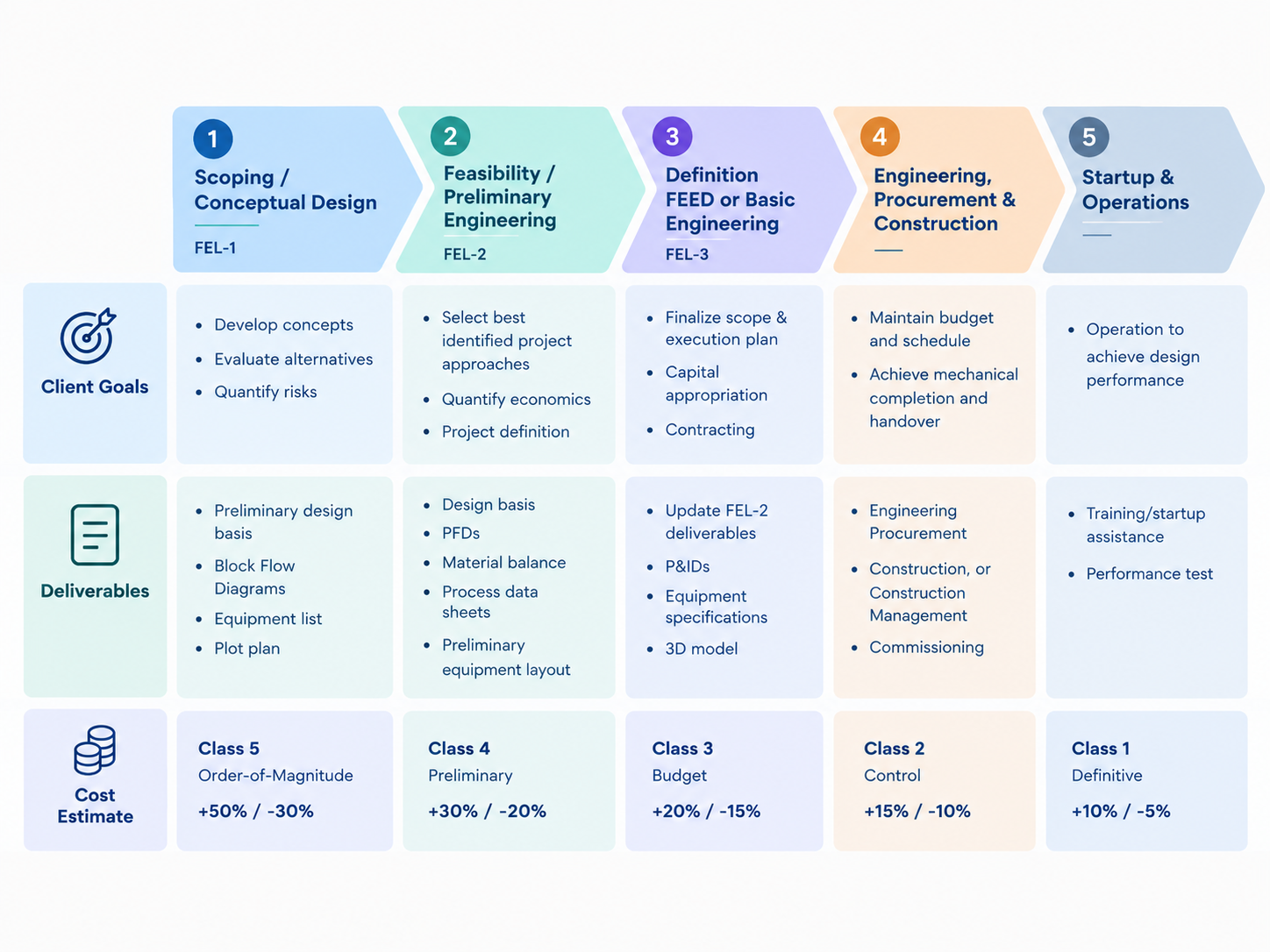
Before committing real money to a project, AIPEC answers two questions: is it worth doing, and if so, what will it actually take? Feasibility work confirms technical viability and realistic cost using engineering analysis instead of guesswork, while FEED builds on that foundation with the process simulation, cost accuracy, and safety review needed to fund the project with confidence.

What This Answers
  • Is It Achievable? Feasibility studies and process reliability modeling confirm a project idea is technically sound before further investment.
  • Will It Work? Process simulation confirms the design performs as intended before any funds go toward construction.
  • What Will It Cost, Realistically? Not a rough guess, an estimate accurate enough to bring to a funding committee with confidence.
  • What Could Go Wrong? A formal Process Hazard Analysis (PHA) catches safety issues while they're still inexpensive to redesign around.

AIPEC has the simulation tools to define the process needs and the engineering depth to carry that through FEED and into detail engineering, including process simplification, best technology selection, design to capacity, and value engineering for the lowest life cycle cost.

Sometimes the honest outcome is a recommendation that a project isn't worth pursuing as originally conceived. That's a genuinely valuable result, since it's far cheaper to learn that now than after breaking ground.

Request This Service
Engineering, Procurement & Construction

Engineering, Procurement & Construction Management

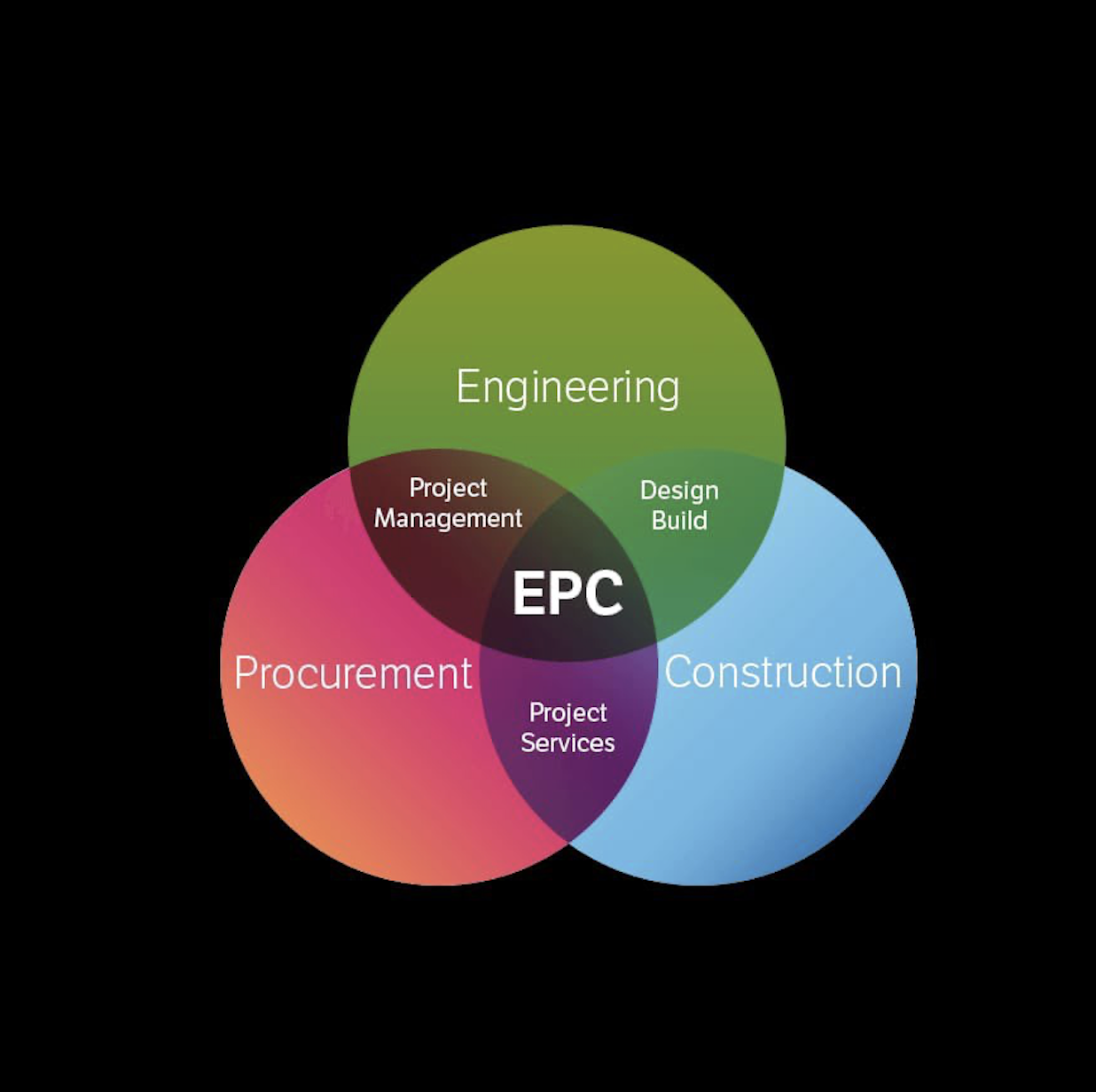
Instead of hiring three separate companies to design, buy materials for, and build a project, AIPEC delivers all three under one roof, with one team accountable from start to finish. This is the foundation of how AIPEC-USA operates: full EPC delivery from conceptual design through construction and commissioning, managed under one team and one point of accountability.

How A Typical EPC Project Moves Through AIPEC
  1. Engineering The design team defines exactly how the system will work, down to every pipe, structure, and piece of equipment, applying the same High Value Engineering (HVE) approach AIPEC uses across every project: top-tier expertise and smart decision-making aimed at solutions that are cost-effective, resilient, scalable, and fit for real-world use, not just technically excellent on paper.
  2. Procurement Long-lead items get ordered early based on the finalized design, while engineering continues refining the finer details, so purchasing never becomes a bottleneck later in the schedule.
  3. Construction The build happens on-site, with the same team that designed it available to answer questions and resolve issues in real time, backed by robust QA/QC systems at every stage.
  4. Commissioning The finished system is tested and safely started up before being formally handed over to the client, with plant start-up and training support included where needed.
  5. Closeout Documentation, lessons learned, and final quality checks wrap up the project, feeding directly into AIPEC's continuous improvement process for the next engagement.

Why the single-team structure matters: when the same company owns every phase, there is no finger-pointing between separate design and construction firms when something needs adjusting. One team already understands the full context, which is exactly why AIPEC-USA is committed to schedule-driven execution, backed by strategic alliances with global construction partners that enable scalable workforce solutions when a project needs to grow quickly.

Request This Service
Professional Procurement Service

Professional Procurement Service

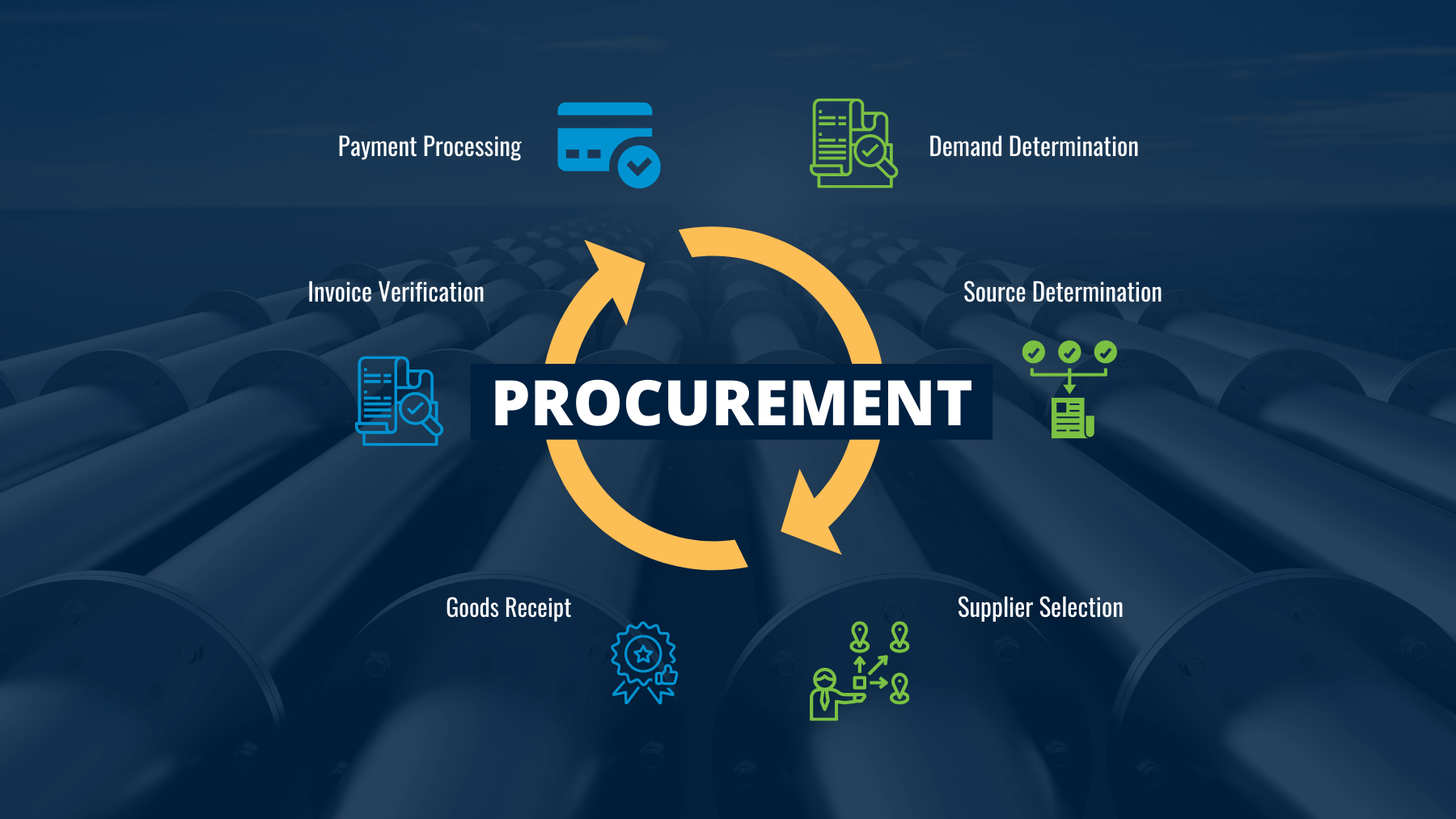
Once a design is finalized, someone has to source and purchase everything needed to build it, then get it delivered on time. This service is AIPEC managing that entire process professionally, working directly with vetted vendors and suppliers so procurement never becomes the reason a project falls behind.

The Procurement Timeline
  1. Sourcing Identifying and vetting the right suppliers for each piece of equipment or material, drawing on established vendor relationships.
  2. Ordering Placing orders early for anything with a long manufacturing lead time, so it does not become the bottleneck holding up construction later.
  3. Expediting Monitoring order status and vendor progress through vendor surveillance, rather than passively waiting for a delivery date to arrive.
  4. Delivery Coordinating logistics so materials arrive exactly when the construction schedule needs them, in the right sequence, ready for the field team.

Why lead time matters: some specialized industrial equipment takes months to manufacture. Ordering late does not just delay that one item, it can stall an entire construction schedule waiting on it, which is exactly the kind of risk AIPEC's procurement team is built to manage proactively.

Request This Service
Maintenance, Reliability, Mechanical Integrity

Maintenance, Reliability, Mechanical Integrity

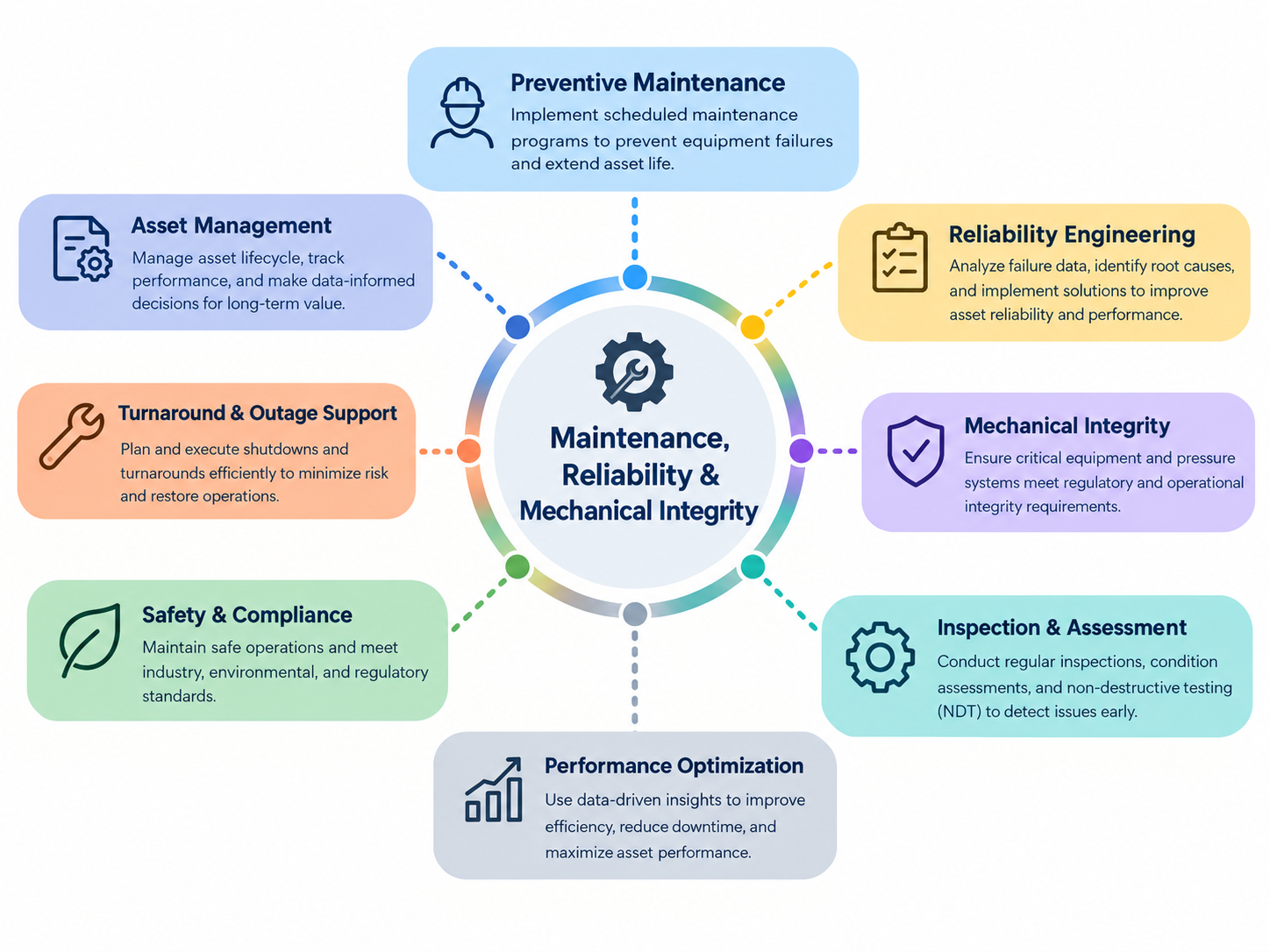
Once a facility is up and running, equipment naturally wears down over time. This service proactively manages that wear so problems get caught and addressed early, before they turn into unplanned shutdowns or safety incidents.

Mechanical Integrity

  • API-510 Pressure Vessel Inspection
  • API-570 Piping Inspection
  • API-653 Storage Tank Inspection
  • Corrosion Under Insulation (CUI) Assessment

Reliability Engineering

  • Root Cause Analysis for engineered equipment failure
  • Troubleshooting and Debottlenecking
  • Rotating Equipment Planning and Coordination

To better support clients with limited or no in-house professional and engineering staff, AIPEC has built a seasoned team of Subject Matter Experts (SMEs) covering all key reliability disciplines. Comprised largely of former process plant professionals, this team is available on short notice to address critical reliability challenges with fast, effective, and cost-efficient solutions, drawing on real operating experience rather than theory alone.

Request This Service
Pipe Stress Analysis, PRV/PSV Flare Study

Pipe Stress Analysis, PRV Study, and Flare Study

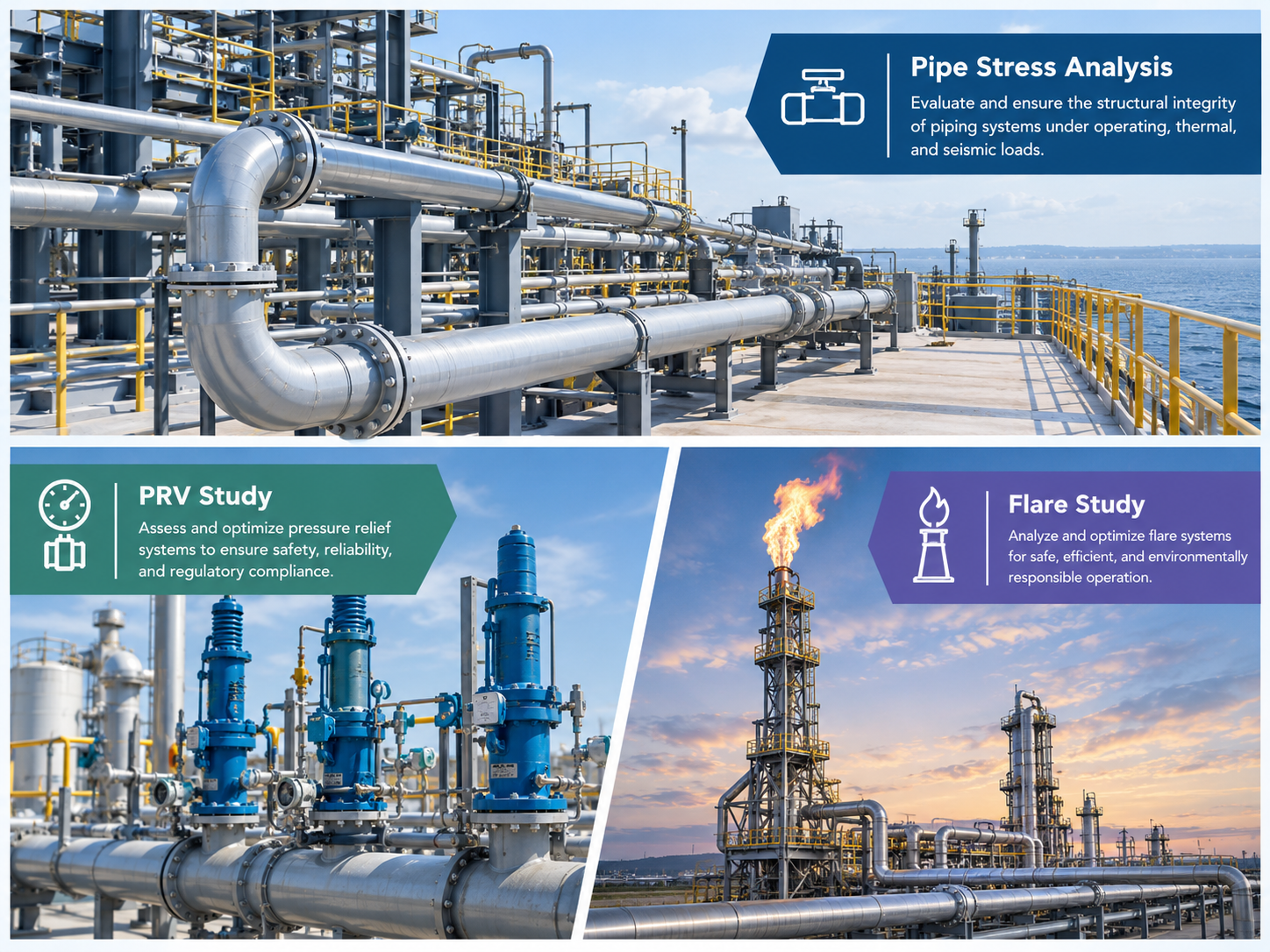
Pipes carrying hot, pressurized, or hazardous material expand and push against their supports as conditions change. This service is the engineering work that confirms a piping system can safely handle that movement, along with the safety systems that release pressure in an emergency, verified to actually perform when needed.

What This Prevents
  • Pipe cracking or failure caused by unaccounted for thermal expansion.
  • Excess stress placed on connected equipment as pipe systems move under load.
  • An undersized relief system that cannot safely vent pressure during an emergency.
  • A flare system that cannot handle the volume it is actually called on to burn off in a real event.
Technical Scope
  • Pipe stress analysis under operating, thermal, and seismic loading conditions.
  • PRV and PSV (Pressure Relief Valve and Pressure Safety Valve) sizing and specification.
  • Flare system studies and relief scenario modeling.
  • Pipe and structural design for petrochemical plants, including code compliance verification against ASME B31.3 and related standards.

This is safety critical engineering, and it reflects AIPEC's broader commitment to safety driven execution: work performed correctly the first time, so relief systems function exactly as designed the one time it truly matters.

Request This Service
In Plant Professional Services

In Plant Professional Services

When a client doesn't have enough in-house professional staff, AIPEC sends its own qualified professionals to work directly at the client's facility, becoming a temporary but fully capable extension of their team rather than making the client go through a lengthy hiring process.

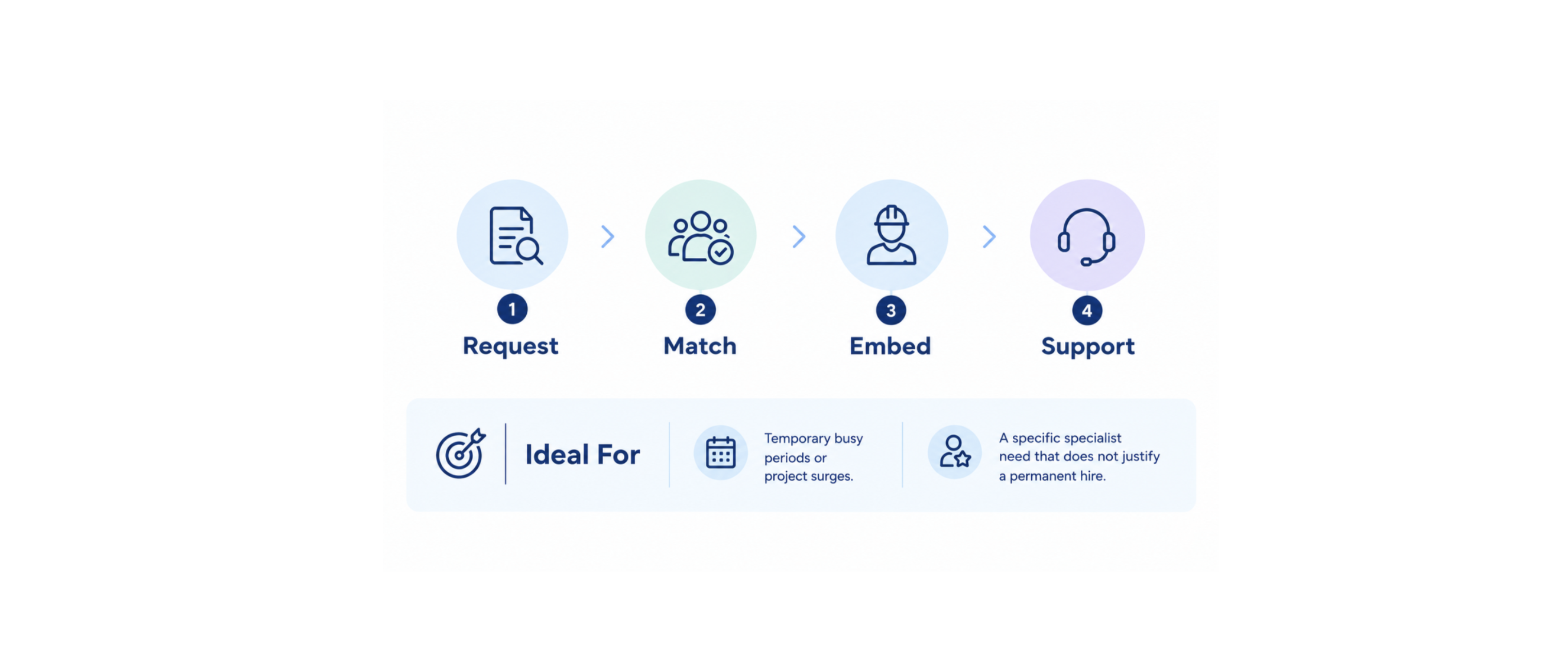
How It Works
  1. Request The client identifies a staffing gap, whether short-term or ongoing.
  2. Match AIPEC places a professional with the right discipline background for the specific need.
  3. Embed That person works on-site as part of the client's team, following their existing processes rather than imposing new ones.
  4. Support AIPEC's broader engineering bench remains available as backup, even while personnel are embedded on-site.
Ideal For
  • Companies going through a temporary busy period or project surge.
  • A specific specialist need that does not justify a permanent hire.

This service reflects the same seconded professional personnel model AIPEC-USA provides through its strategic relationships: engineering consulting, inspection, reliability and stress engineering, mechanical integrity, and project management support, placed directly where a client needs it most.

Request This Service

Other Available Services

AIPEC's actual capability runs significantly deeper than the six services above. Additional disciplines available across every project include:

  • Process Safety Management PHA and HAZOP facilitation at key project milestones.
  • Automation & Control Systems Engineering Instrumentation and control system design.
  • Inspection & Compliance API, NFPA, NACE, and AWS certified work.
  • Plant Start-Up & Commissioning Support and training through final handover.
  • Technology & Licensor Evaluations Independent evaluation of process technologies and licensor packages.
  • Document Management Organized control of project documentation, drawings, and specifications.

Have A Project In Mind?

Tell us about your scope and a member of the AIPEC-USA team will follow up.

Request Information